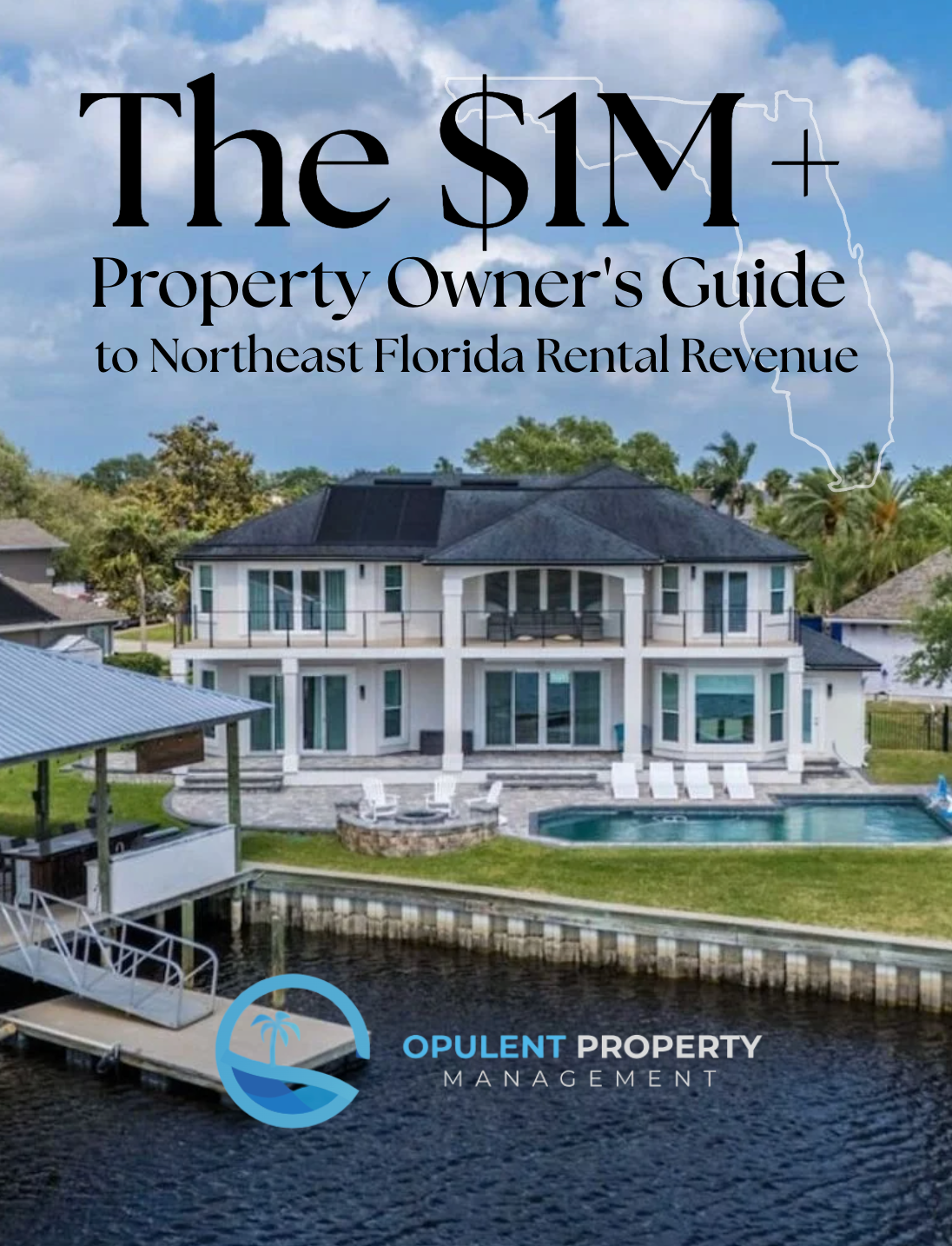
When a client asks whether their million-dollar oceanfront property can operate as a vacation rental, the answer…
depends entirely on which side of a county line they’re standing.
Northeast Florida’s short-term rental landscape isn’t governed by a single set of rules. It’s a jurisdiction-by-jurisdiction reality where occupancy limits, registration requirements, and tax obligations shift depending on whether you’re in Duval County or St. Johns County, inside city limits or in unincorporated areas, within an HOA or outside one.
For realtors advising clients on luxury vacation rental investments—or helping owners decide whether to convert a property to short-term rental use—understanding these distinctions isn’t optional. It’s the difference between a smooth transaction and a compliance headache that surfaces months after closing.
Here’s what the regulatory picture actually looks like across the markets that matter most for luxury vacation rental property management in Northeast Florida.
St. Johns County
The Guest Ceiling
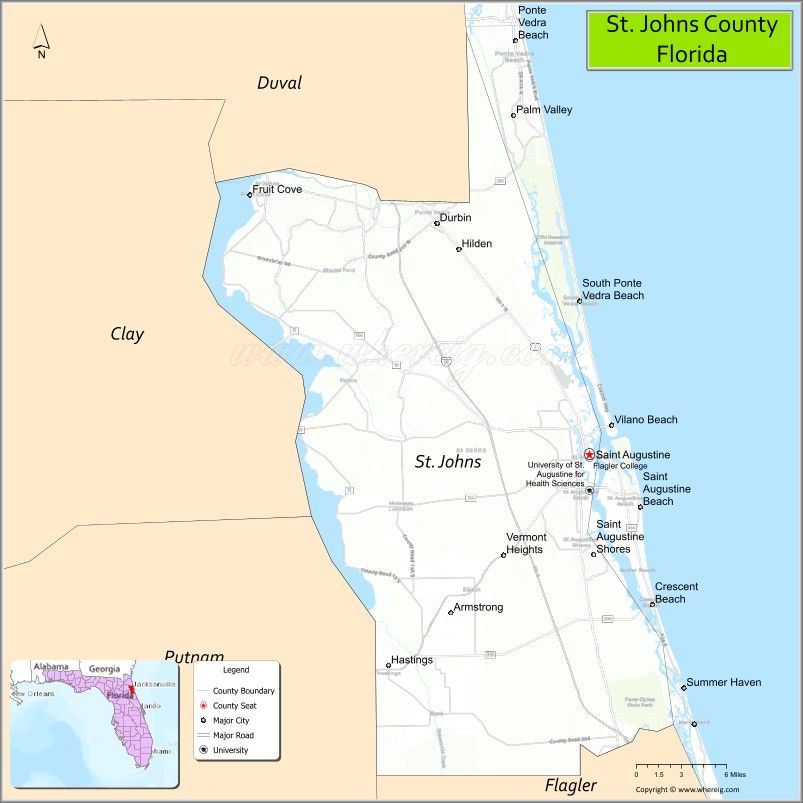
St. Johns County’s Ordinance 2021-23 governs all unincorporated areas east of the Intracoastal Waterway—including the high-value Ponte Vedra Beach market. The regulation that matters most for luxury property investors: a permanent maximum of 10 transient occupants regardless of home size, with children 12 and under excluded from the count.
This creates real math problems for large homes. A seven-bedroom oceanfront estate that could theoretically accommodate 14-plus guests is legally capped at 10, potentially reducing rental revenue by 30-40% compared to markets without such restrictions. The cap phased in over three years, reaching its permanent limit on May 4, 2024.
Ponte Vedra Beach properties fall under full county jurisdiction with no separate municipal overlay. Registration requirements include county registration renewed annually, a Florida DBPR license, Department of Revenue certificate, local business tax receipt, and St. Johns County tourist tax account. Parking minimums require one off-street space per three occupants.
Properties west of the Intracoastal are exempt from county STR regulations entirely—a geographic quirk that occasionally creates opportunities for investors willing to accept slightly less prime locations.
Governor DeSantis’s June 2024 veto of Senate Bill 280 preserved the local regulatory framework described above. The bill would have created sweeping statewide preemption of local STR regulations. In his veto message, the Governor stated the bill would create “new bureaucratic red tape” and “prevent virtually all local regulation of vacation rentals,” noting that vacation rental markets “are far from uniform across the various regions of the state.”
For the 2026 legislative session, Senator Nick DiCeglie—the 2024 bill’s sponsor—explicitly stated he won’t pursue similar legislation: “I don’t think there’s going to be any effort to change anything from a local standpoint.” No comprehensive STR preemption bill has been filed for 2026, suggesting regulatory stability through at least the near term.
Current state law (Florida Statutes §509.032) prevents local governments from prohibiting vacation rentals entirely or regulating duration or frequency of stays—unless their ordinance predates June 1, 2011. But local governments retain clear authority to regulate registration programs, fees, inspections, occupancy limits, parking, noise, trash, signage, and responsible party requirements. The differences across Northeast Florida jurisdictions aren’t going away.
The HOA Variable
Where Private Rules Override Public Ones
Here’s the insight that separates informed advisors from everyone else: for luxury communities, HOA restrictions often matter more than county regulations.
HOAs are private entities not subject to state preemption laws that protect STRs from local government bans. A Sawgrass or TPC Sawgrass community HOA can absolutely prohibit short-term rentals even when St. Johns County permits them. The county sets the floor, not the ceiling—private deed restrictions determine actual STR viability.
Ponte Vedra Beach luxury communities typically operate under layered association structures. Sawgrass Association encompasses 30-plus neighborhoods with individual HOAs under a master association. TPC Sawgrass and Sawgrass Players Club include 16 smaller communities, each with separate HOA governance. Nocatee operates under its own community association rules.
Despite potential restrictions, vacation rental companies actively market TPC Sawgrass and Sawgrass Country Club properties for short-term stays, particularly during THE PLAYERS Championship. The discrepancy between what’s advertised and what’s permitted underscores why due diligence on CC&Rs is non-negotiable before any luxury STR acquisition.
Florida Statute §720.306(1)(h), effective July 1, 2021, governs HOA rental restrictions with important grandfathering provisions. Restrictions enacted after July 2021 generally apply only to owners who acquired property after the effective date—except for restrictions prohibiting rentals under six months or limiting rentals to three times per calendar year, which apply to all owners regardless of purchase date.
Enforcement Realities Across the Region
Enforcement intensity varies dramatically across jurisdictions—information that matters when advising clients on compliance risk.
St. Johns County employs the most systematic approach with a dedicated STR Hotline managed by a third-party vendor who contacts property owners within one hour of complaints. Maximum fines reach up to $15,000 for irreparable violations under Florida Statute 162. The county’s phased citation system begins with warnings, escalates to $118 first-offense fines and $268 repeat offenses, with liens that can remain in force for 20 years.
Jacksonville Beach faces enforcement challenges, with Mayor Christine Hoffman acknowledging cities have “very little power” over STRs due to state preemption. Resident complaints about properties becoming a “revolving door” for party groups have intensified, though regulatory capacity hasn’t expanded correspondingly.
St. Augustine maintains dedicated noise complaint lines and regular life safety inspections. The historic district’s monthly minimum requirement effectively self-regulates by eliminating traditional vacation rental activity from the core tourism zone—a design feature, not a bug, from the city’s perspective.
What This Means for Your Clients
The regulatory landscape favors Jacksonville Beach and Ponte Vedra Beach over St. Augustine’s historic district for traditional luxury vacation rental investment. St. Johns County’s 10-guest cap significantly impacts large home revenue potential—a seven-bedroom property generates substantially less than it would across the county line in Jacksonville Beach, where a 12-guest maximum applies.
Tax planning should account for the two-percentage-point tourist development tax differential between counties, which compounds meaningfully over high rental volumes. The compliance burden of monthly tax filings isn’t onerous, but it does require systems that many individual owners don’t have in place.
The 2024 veto signals regulatory stability through at least 2026, meaning the current jurisdictional differences will persist. But HOA restrictions remain the primary variable for luxury communities—the question isn’t just “does the county allow it” but “do the deed restrictions permit it.”
For realtors working in the luxury vacation rental space, this complexity is precisely where value gets created. Understanding which properties can actually perform as STRs—and which face restrictions that undermine the investment thesis—separates advisors who close deals from those who create problems.
Key Takeaways
Occupancy limits vary significantly
Jacksonville Beach allows 12 guests maximum; St. Johns County (including Ponte Vedra Beach) caps at 10 regardless of home size; St. Augustine’s historic district requires monthly minimum stays.
Tax obligations differ by county
Duval County properties pay 13.5% combined (sales + tourist development tax); St. Johns County properties pay 11.5%. Neither county has automatic platform collection of local TDT.
The 2024 veto preserved local control
Governor DeSantis rejected statewide preemption, and no similar legislation is expected in 2025. Current regulatory differences will persist.
HOA restrictions often supersede county rules
Private deed restrictions can prohibit STRs even where counties permit them. CC&R review is essential before any luxury STR investment.
Enforcement intensity varies
St. Johns County employs systematic third-party complaint monitoring with fines up to $15,000. Jacksonville Beach faces enforcement limitations due to state preemption.
Stay Ahead of the Regulations
Northeast Florida realtors, wealth advisors, and luxury service providers—if you’re advising clients on vacation rental investments in Jacksonville Beach, Ponte Vedra, or St. Augustine, staying current on regulatory changes matters.
The Elite Partner Collective is our partnership program for professionals working with high-net-worth clients in these markets. Partners receive quarterly regulatory updates covering zoning changes, compliance requirements, and enforcement trends across Northeast Florida—plus market intelligence on occupancy trends, revenue benchmarks, and neighborhood-level insights.
When opportunities arise to recommend a luxury short-term rental management company, partners earn $1,500-$10,000+ per referral based on property value. You’ll also receive a personal 10% discount code to share with VIP clients.
Free to join. Apply here.

Get The $1M+ Property Owner’s Guide to Northeast Florida Rental Revenue to learn more about operating a vacation rental in this market or contact us for a property-specific rental opportunity analysis.